 Local
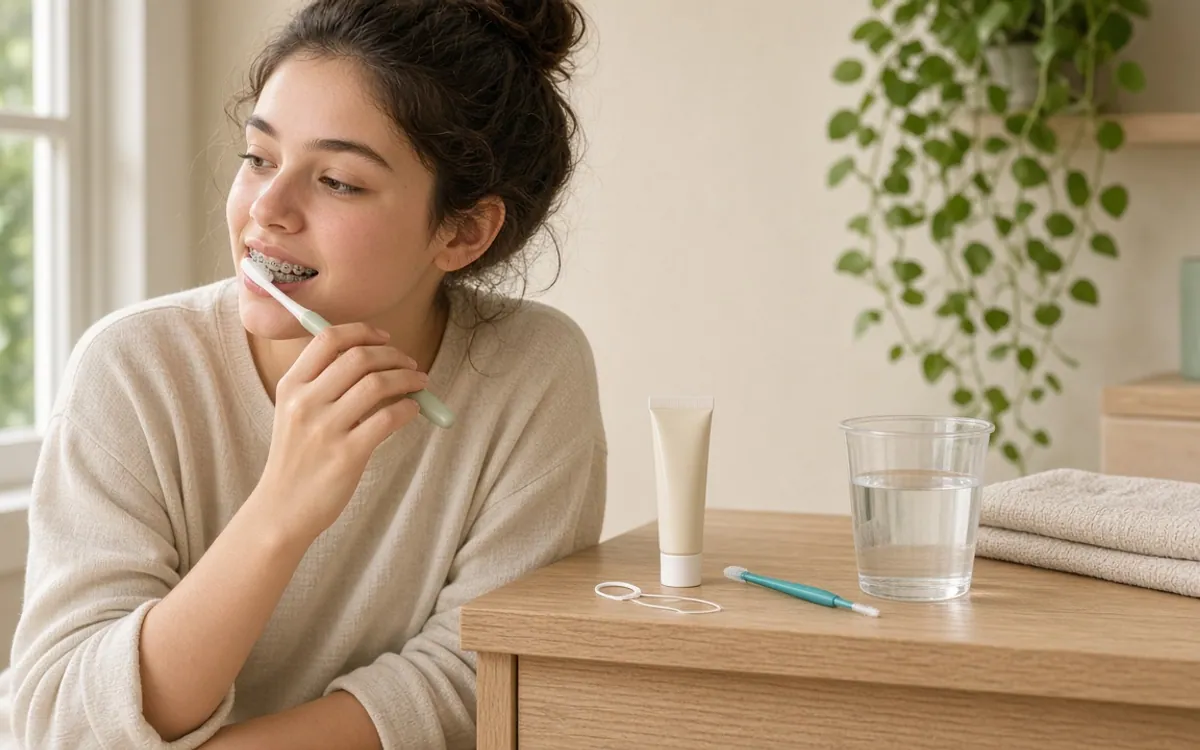
Braces create more places for food and plaque to hide. The American Association of Orthodontists (AAO) says a simple daily routine keeps your teeth and gums clean during treatment: brush after meals and before bed, floss at least once a day, and call your orthodontist's office if something feels loose or broken.
Your orthodontist may give you their own steps. Follow those first. This guide collects the AAO's plain advice into a checklist you can use at home and on the go.
Brushing with braces
The AAO's general rule is to brush for two minutes after every meal or snack, and again before bed. Use fluoride toothpaste. Soft bristles work well, and you can use a manual brush or a power brush. Pick the one that helps you clean around your brackets.
A short brushing checklist:
- Brush for about two minutes each time.
- Clean above and below the wires, around each bracket, and every tooth surface (fronts, sides, and backs).
- Gently brush your gums, tongue, and the roof of your mouth.
- Change your toothbrush (or power brush head) when the bristles look worn, or at least every few months.
- Carry a travel toothbrush and a small tube of toothpaste so you can brush away from home.
If you cannot brush right after you eat or drink, rinse with plain water. That is a stopgap, not a replacement for brushing later.
After sweets, brush when you can. For food ideas that are easier on braces, see Eating with braces.
Flossing with braces
Floss at least once a day. Brushing alone cannot reach between teeth the way floss can, and braces make those spaces harder to get to.
Tools that help (no brand names needed):
- Floss threader: a small loop that pulls regular floss under the archwire so you can clean between each tooth.
- Pre-threaded floss: floss that already has a stiff end, so you can guide it under the wire without a separate threader.
- Orthodontic flossers: small floss picks shaped to work around brackets and wires.
A short flossing checklist:
- Floss at least once a day. Ask your orthodontist whether they want you to floss before or after you brush.
- Thread the floss under the wire, clean along the gumline between each tooth, then move to the next space.
- Take a pocket-sized floss with you. Lunch and after-school snacks are when food often sits around brackets.
Extra tools that help
Beyond a toothbrush and floss, the AAO points to a few extras your orthodontist may suggest:
- Interproximal brush (also called an interdental brush): a small brush that clears plaque and food trapped between teeth and around brackets and wires. Handy after meals.
- Water irrigator (sometimes called a water flosser): uses a stream of water to flush food from around braces. Ask your orthodontist whether one fits your routine.
- Fluoride mouth rinse: a daily rinse (over the counter or prescription strength) that can help strengthen enamel. Your orthodontist may also suggest dipping an interproximal brush in a capful of fluoride rinse.
Ask your orthodontist's office which of these they want you to use. You do not need every tool on day one.
Around meals and on the go
A small kit makes the routine easier away from home. The AAO's on-the-go list includes:
- Clean water (for rinsing when you cannot brush)
- A toothbrush
- An interproximal brush
- Floss (with a threader or pre-threaded floss)
- Toothpaste
- A small mirror, or your phone's camera, to check for leftover food
Rinse with water after a sugary snack or drink if brushing has to wait. Keep seeing your family dentist for cleanings and checkups during treatment. Your orthodontist and your dentist both watch oral health while braces are on.
If you wear aligners
Aligners need cleaning too. The AAO says to take them out before you eat or drink anything other than water, clean your teeth thoroughly, then put the aligners back in. Give the aligners a thorough cleaning as well. Ask your orthodontist's office which cleaning method they prefer for your trays.
When to call your orthodontist's office
Call the office if:
- A bracket feels loose or comes off
- A wire shifts or pokes
- Something feels broken
- You have unusual discomfort that does not settle
Tell them what happened and ask what to do next. Do not try to fix braces yourself at home.
Looking for an orthodontist?
If you are starting treatment or want a practice closer to home, browse orthodontists in the LocalSmileFinder directory and ask each office how they coach patients on brushing and flossing with braces.