 Local
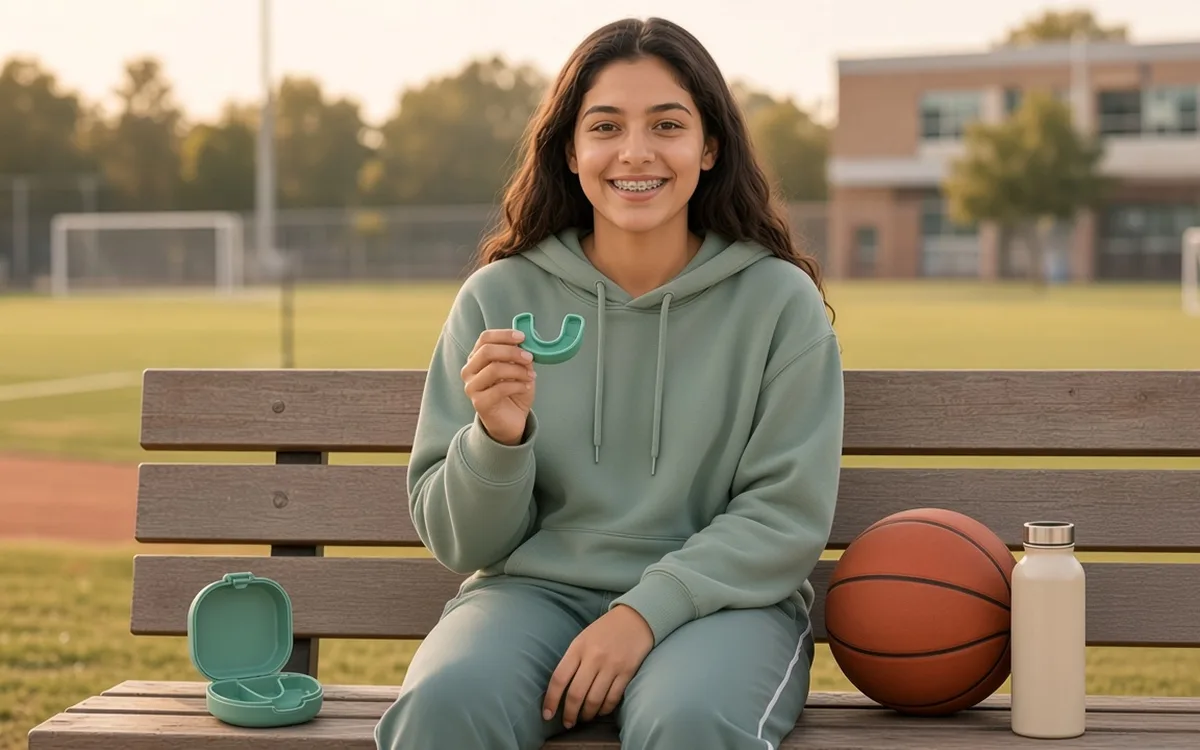
You can keep playing sports with braces or aligners. The American Association of Orthodontists (AAO) says the main thing is a mouthguard: wear one over your braces at practice and at games, and if you wear aligners, take them out and wear a mouthguard for contact play.
If you or your child plays a sport, it helps to sort this out before the next practice. Basketball, hockey, wrestling, and skating can all put faces near elbows, sticks, and hard surfaces. This guide gives you the questions to bring to your orthodontist, a plain look at the kinds of guards, what aligner wearers should know, what to do if your braces take a hit, and how to keep your guard clean.
Questions to ask your orthodontist
The AAO suggests talking with your orthodontist about which mouthguard is right for you. Tell them which sport you play and what gear your team already uses. If you are still choosing an orthodontist, the LocalSmileFinder consultation checklist covers the broader questions to ask first.
About the guard itself
- Which kind of mouthguard do you suggest for my sport?
- Do you make custom mouthguards here, or should I get one somewhere else?
- Will a guard fit over my brackets and wires?
- What should a good fit feel like?
- Can I use my night guard for sports? (The AAO says no. A night guard and a sports guard are built for different jobs.)
About changes during treatment
- My braces will change as treatment goes on. How will I know if my guard still fits?
- Should I bring my guard to my appointments so you can check it?
- When should I replace it?
About practice and game days
- Do I need to wear it at practice too, or only at games?
- Is there anything I should check on my braces after practice?
- Who do I call if something breaks during a game or on a weekend?
The AAO's answer on practice is clear: wear the guard for both practice and games, not only on game day.
The kinds of mouthguards, in plain terms
Mouthguards come in a few general types. Your orthodontist can tell you which one makes sense for your sport and your braces.
- Over-the-counter guards: sold ready to use. The AAO notes that these can be bulkier than a custom guard.
- Boil-and-bite guards: you soften them and shape them to your teeth at home. The AAO calls these better than nothing.
- Custom guards: made from a mold of your mouth. The AAO recommends having your orthodontist take that mold, especially during treatment, and says custom guards stay in place during play.
A few things the AAO says about any guard: it should fit snugly over your teeth, it should cover your braces, and it may feel a little odd to talk in at first. Most people get used to it with practice.
If you wear aligners
Aligners are not a mouthguard. For contact play, the AAO says to take your aligners out and wear a mouthguard instead.
That raises a few practical questions for your orthodontist:
- Which mouthguard do you suggest while I am in aligners?
- Where should I keep my aligners while I play?
- When should I put them back in after a game or practice?
- Does any of this change if I play a sport with less contact?
If a bracket or wire takes a hit
After practice, take a quick look at your braces to make sure everything is where it should be. If a bracket breaks or a wire shifts, the AAO says to contact your orthodontist quickly and not to play through it.
Call your orthodontist's office, tell them what happened, and ask what to do next.
Keeping your guard clean
A guard gets used hard and tossed in a bag, so a simple routine helps. These steps come from the AAO:
- Rinse it with cool water before and after you wear it.
- Brush it gently with a soft toothbrush and mild soap.
- Let it air-dry all the way.
- Store it in a case with air holes, not a closed container.
- Keep it out of hot water and direct sun, which can warp it.
- Check it for cracks, chew marks, or a loose fit. If it is damaged or does not fit right, replace it.
The AAO also suggests getting a new guard after a big growth spurt or dental work, so ask your orthodontist about that at your next visit.
Looking for an orthodontist?
If you are starting treatment or want a practice closer to home, browse orthodontists in the LocalSmileFinder directory and ask each office how they handle mouthguards for patients who play sports.